

Managing a single retail location is a challenge, but scaling operations across dozens of stores in different states is a whole different game. In 2026, the retail industry is battling record-breaking shrink. The National Retail Federation (NRF) reports that annual retail shrinkage has reached a staggering $112.1 billion in losses. While external theft often makes the headlines, industry data shows that a massive portion of lost revenue actually comes from internal process errors, administrative mistakes, and poor cash handling.
Inconsistency is your biggest enemy. When a store in California handles cash drops differently than a location in Texas, it leaves the door open for accounting discrepancies and human error. To secure their bottom line, enterprise retailers are moving away from fragmented, localized procedures. Instead, they’re adopting standardized, cloud-connected cash management. Here’s how that technology bridges the gap between the corporate office and the storefront.
The Foundation: Centralizing Data in the AMSEC Cloud
True standardization requires a single source of truth. Before a company can fix inconsistent cash handling, corporate loss prevention and accounting teams need network-wide visibility. Market analysis from Mordor Intelligence suggests that cloud implementations now account for over 60% of the digital transformation market in retail. This reflects a major industry shift as companies move away from legacy store infrastructure in favor of centralized control.
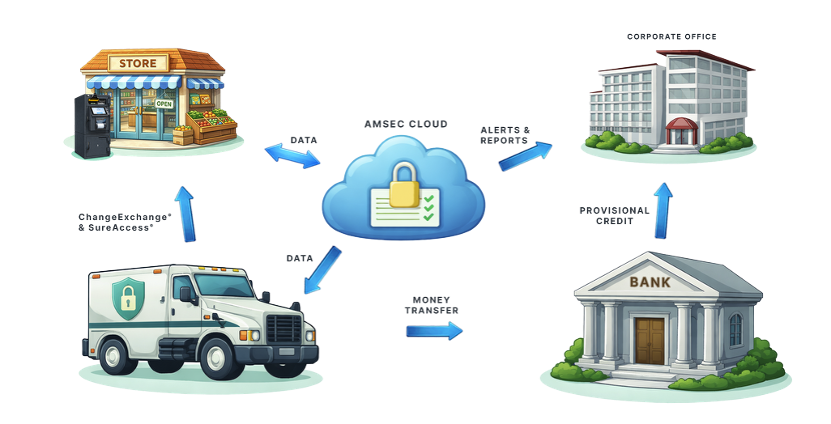
AMSEC delivers this control by providing a private and dedicated cloud instance for each business. This digital backbone connects our CashWizard™ solutions into a unique, secure portal that gives you the power to:
-
View real-time data for deposits, withdrawals, and balances across your specific store network instantly.
-
Maintain comprehensive audit trails because every event is recorded on both the hardware and your private cloud instance.
-
Access automated reporting that sends actionable alerts so you know exactly when a solution in your network’s nearing its limit.
-
Utilize seamless integration to connect your dedicated instance with third-party systems and all regional or national CIT systems through APIs.
Setting up this centralized network is just the starting point for a scalable operation. Once you’ve got the cloud infrastructure in place, your corporate teams can dive into these four high-impact strategies to secure cash and tighten up daily workflows.
1. Speeding Up Cash Flow with Provisional Credit
Don’t let cash sit idle in traditional drop safes over the weekend. It slows down your cash flow and increases on-site risk. The National Association of Convenience Stores (NACS) highlights that traditional cash settlement delays can cost retailers hundreds of dollars per site each month in lost opportunity and hidden fees. Because a connected solution counts and validates cash instantly, that data’s transmitted to the bank in real time to provide:
-
Faster working capital through same-day or next-day credit on verified deposits before the cash even leaves the store.
-
Reduced exposure because immediate validation and transmission mean there’s less cash sitting vulnerable on-site.
-
Safer employees by eliminating dangerous manual bank runs to keep your team and your cash more secure.
2. Securing Vendor Access with SureAccess™
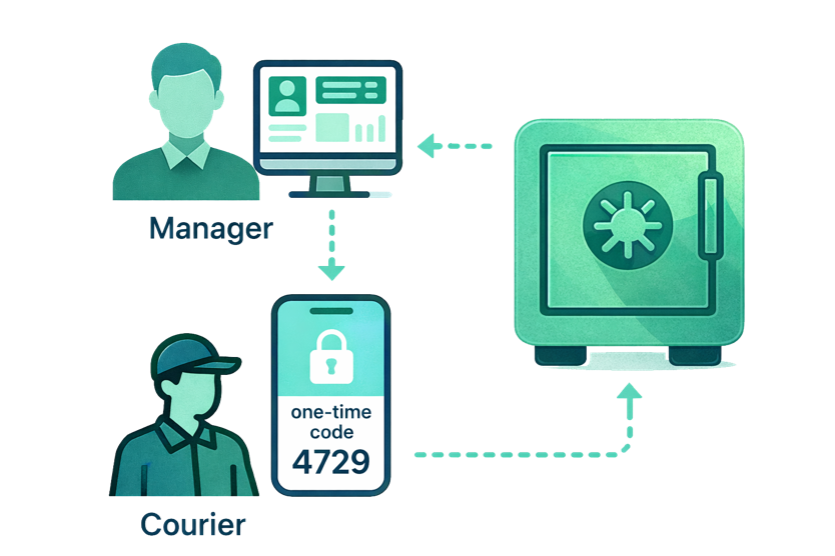
Coordinating armored couriers across multiple states introduces a major security risk through physical keys. Lost keys or complicated hand-offs create massive vulnerabilities. SureAccess replaces physical keys with secure, one-time digital codes for armored courier pickups. This digital approach allows your team to:
-
Enforce tighter access control by eliminating shared keys that reduce security risks and prevent unauthorized access.
-
Receive instant alerts on mobile devices the exact moment a courier attempts to open a solution.
-
Simplify scheduling by managing and tracking courier entries through a complete digital audit trail with timestamps for every single entry.
3. Streamlining Daily Tasks with ChangeExchange®
Getting change to the registers often involves messy tracking spreadsheets that lead to accounting errors. A 2024 report from the Small Business & Entrepreneurship Council (SBEC) highlights that cash-handling costs for retailers typically range from 4.7% to over 15.5% of total revenue. This expense acts as a hidden tax on operations, especially for front-of-store activities like replenishing change. ChangeExchange brings that entire process into a single interface on the solution itself so managers can:
-
Place direct orders on the screen to keep procedures uniform across all states.
-
Rely on automatic reconciliation since the system tracks and reconciles change orders without the need for manual paperwork.
-
Maintain flexible logistics because the system works regardless of your banking partner to ensure stores stay stocked while minimizing fees.
4. Finding Errors Fast with Custom Reporting
You can only fix procedural errors when you’re able to see them. Instead of waiting for regional managers to email end-of-week spreadsheets, corporate teams use the cloud portal for real-time data. Research from DataIntelo indicates that SaaS models for loss prevention are seeing adoption rates increase by 35% annually as retailers seek centralized management. This visibility provides specific reporting tools designed to catch errors, such as:
-
End of Day Reports that let you sum up deposits by day across all locations so you can spot missing cash immediately.
-
Courier Pick-up Reports that give you a way to verify the total cash removed to match against armored transport logs.
-
Capacity Reports that help you project when a solution’s going to be full so you can adjust pickup schedules and cut transport fees.
-
Security Alerts that allow you to monitor over 400 customizable events and set up auto-email notifications for every audit event.
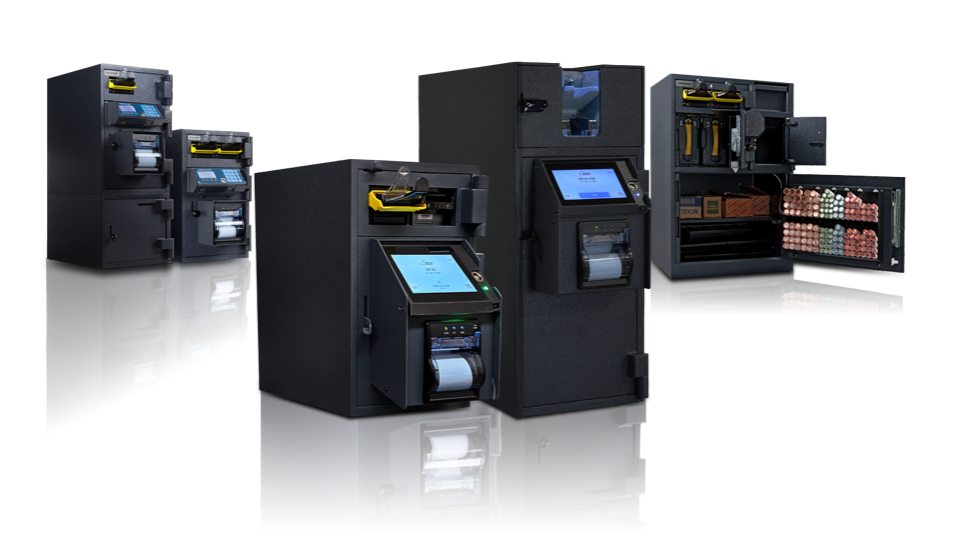
Scaling a loss prevention strategy shouldn’t rely on guesswork. By moving away from reactive management of traditional business safes and adopting a connected network of solutions, you’re replacing fragmented manual processes with a centralized digital ecosystem. This transition provides corporate teams with the real-time visibility and data-driven insights they need to maintain a consistent single source of truth across every storefront, no matter where they’re located.
Ultimately, standardizing your cash management’s about more than just the tech. It’s about protecting your bottom line and your frontline workers. By automating change orders, securing vendor access, and accelerating cash flow through provisional credit, you’re building a culture of absolute accountability. This ensures every location follows the same playbook to drastically reduce the procedural errors and administrative mistakes that drive modern retail shrink.
To learn more about integrating cloud-connected cash management into your existing POS and accounting systems, contact the AMSEC enterprise team.